SolarStat Pro – Professional Solar Observation Software for Windows

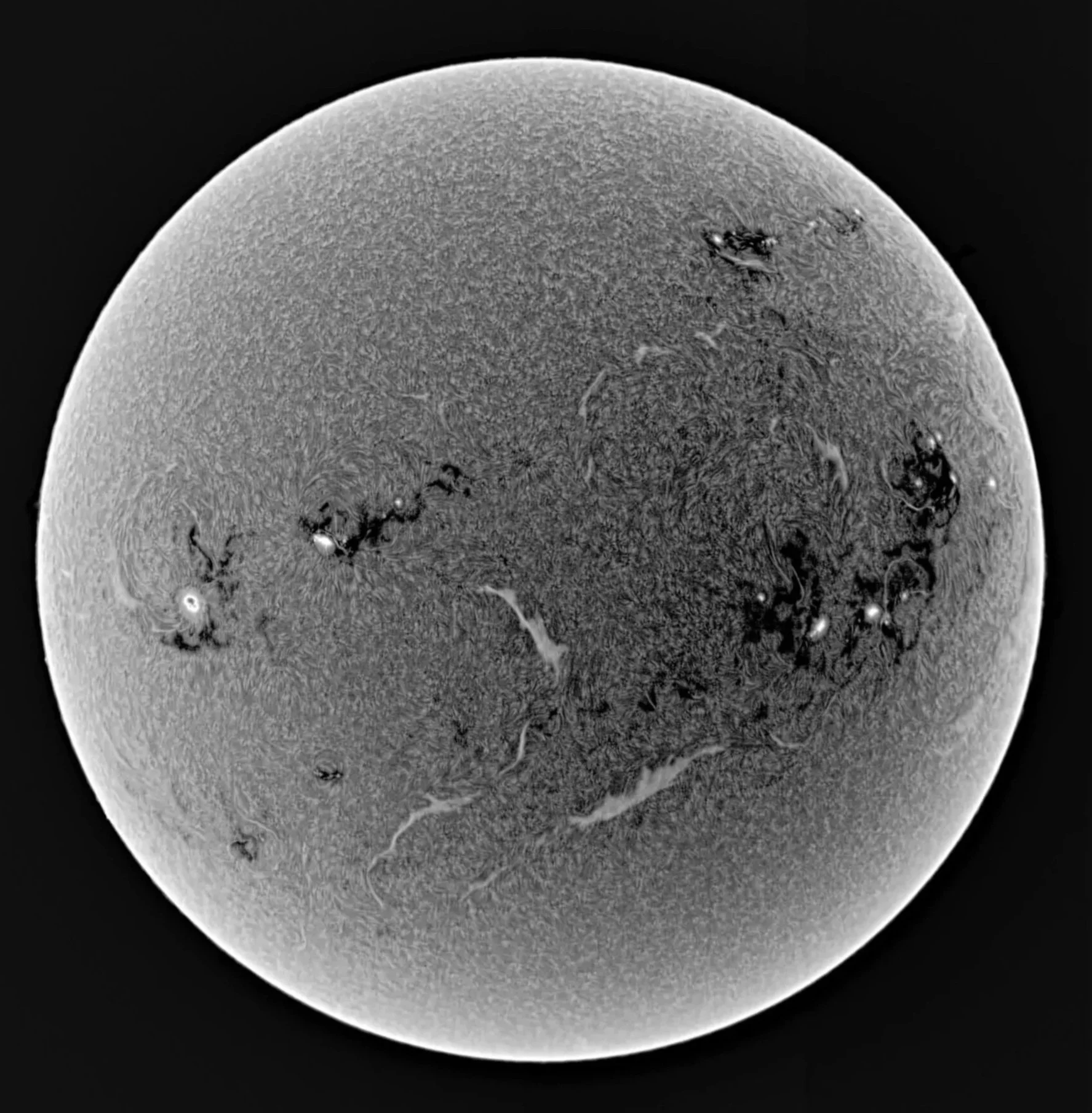
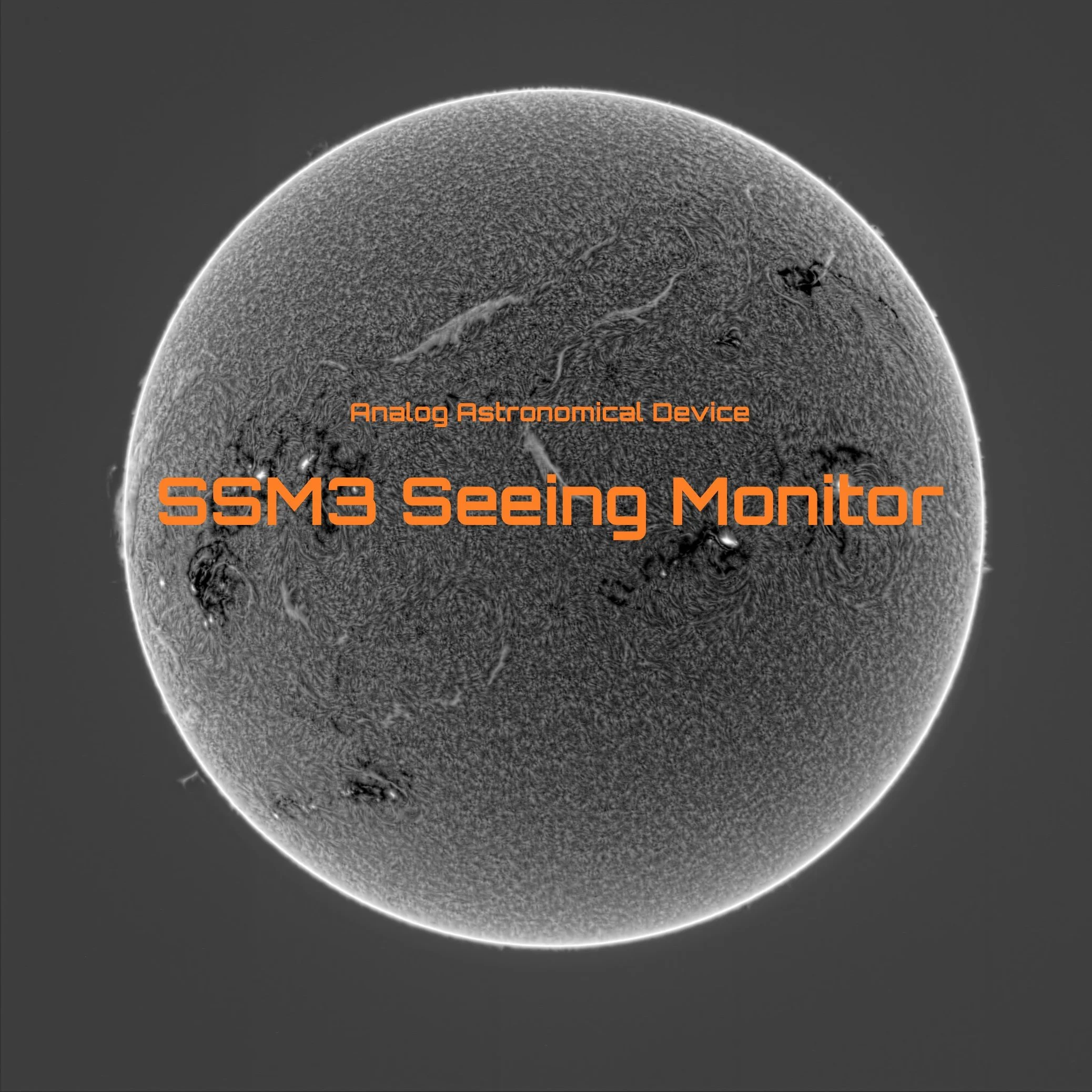
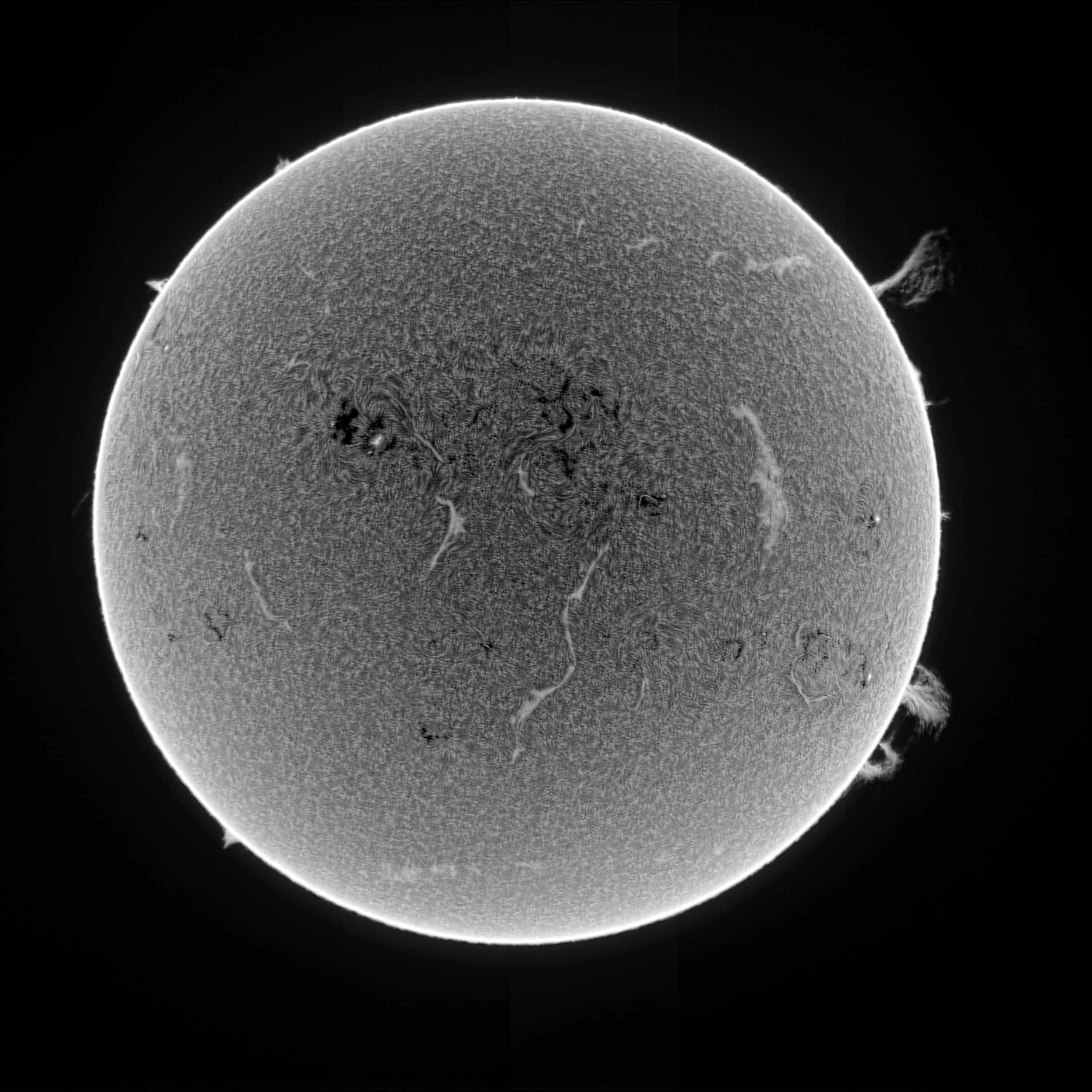
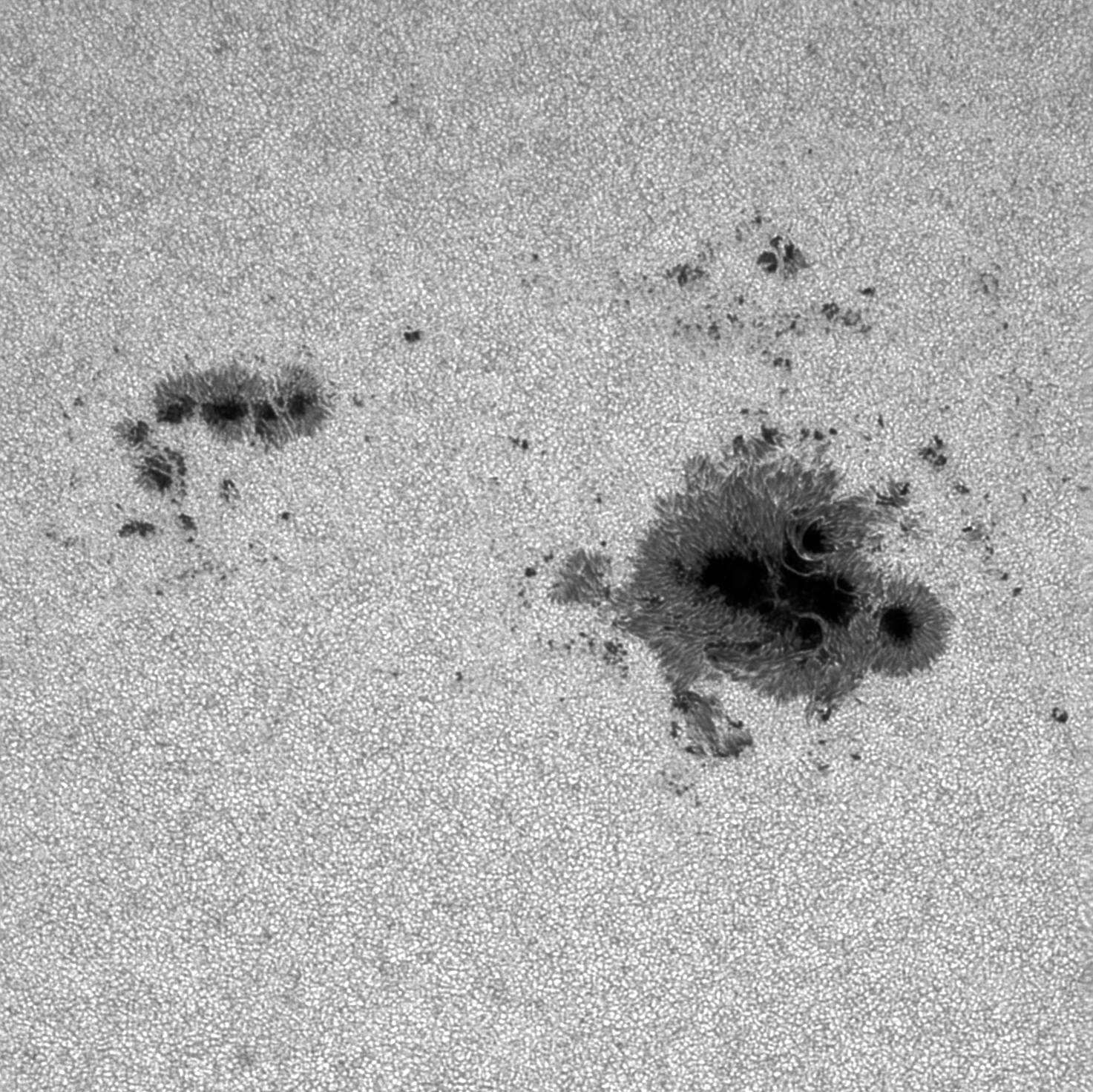
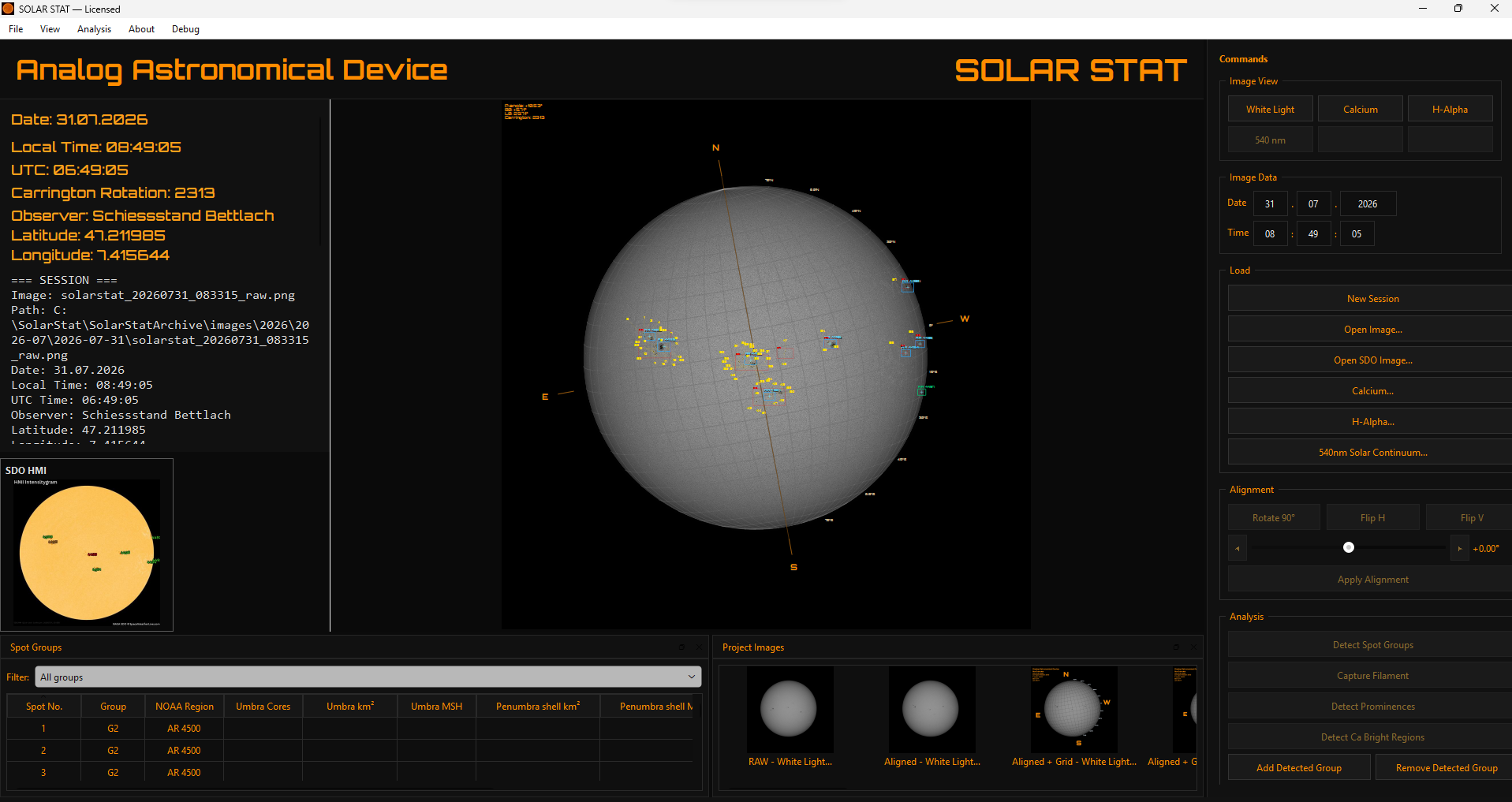
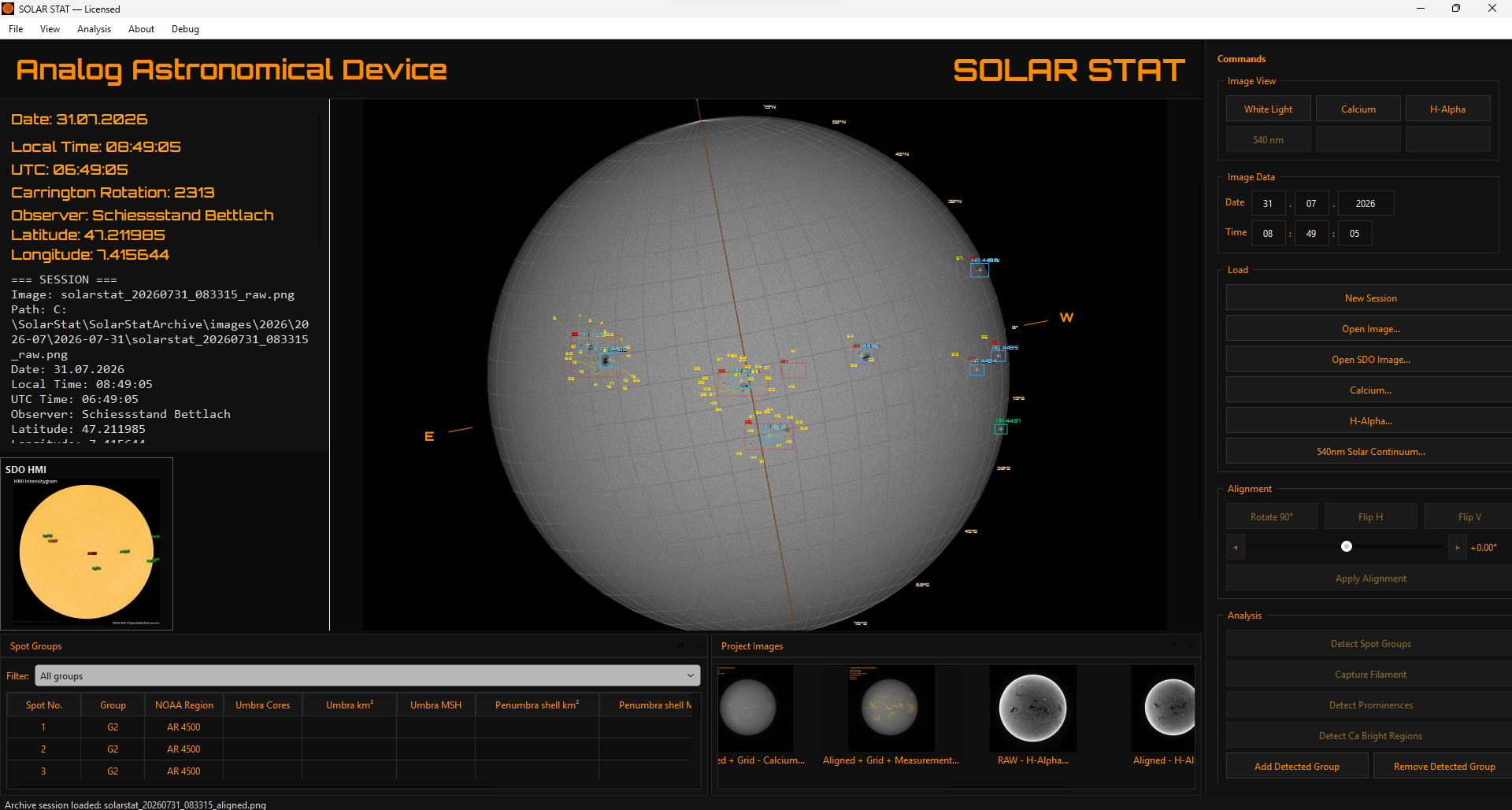
SolarStat Pro is a Windows application for structured solar observation analysis, documentation and archiving. It is designed for amateur solar observers, advanced imagers, astronomy clubs and observatories who want to document solar activity in a clear and reproducible way. SolarStat Pro supports White Light, H-Alpha, Calcium and 540 nm / Continuum observations and combines image analysis, solar coordinates, NOAA/SRS comparison, measurements, reporting and session archiving in one workflow.

Main Features

  • Sunspot and spot-group documentation

  • Manual spot marking and area measurements

  • Heliographic grid and solar coordinate display

  • NOAA/SRS active region comparison

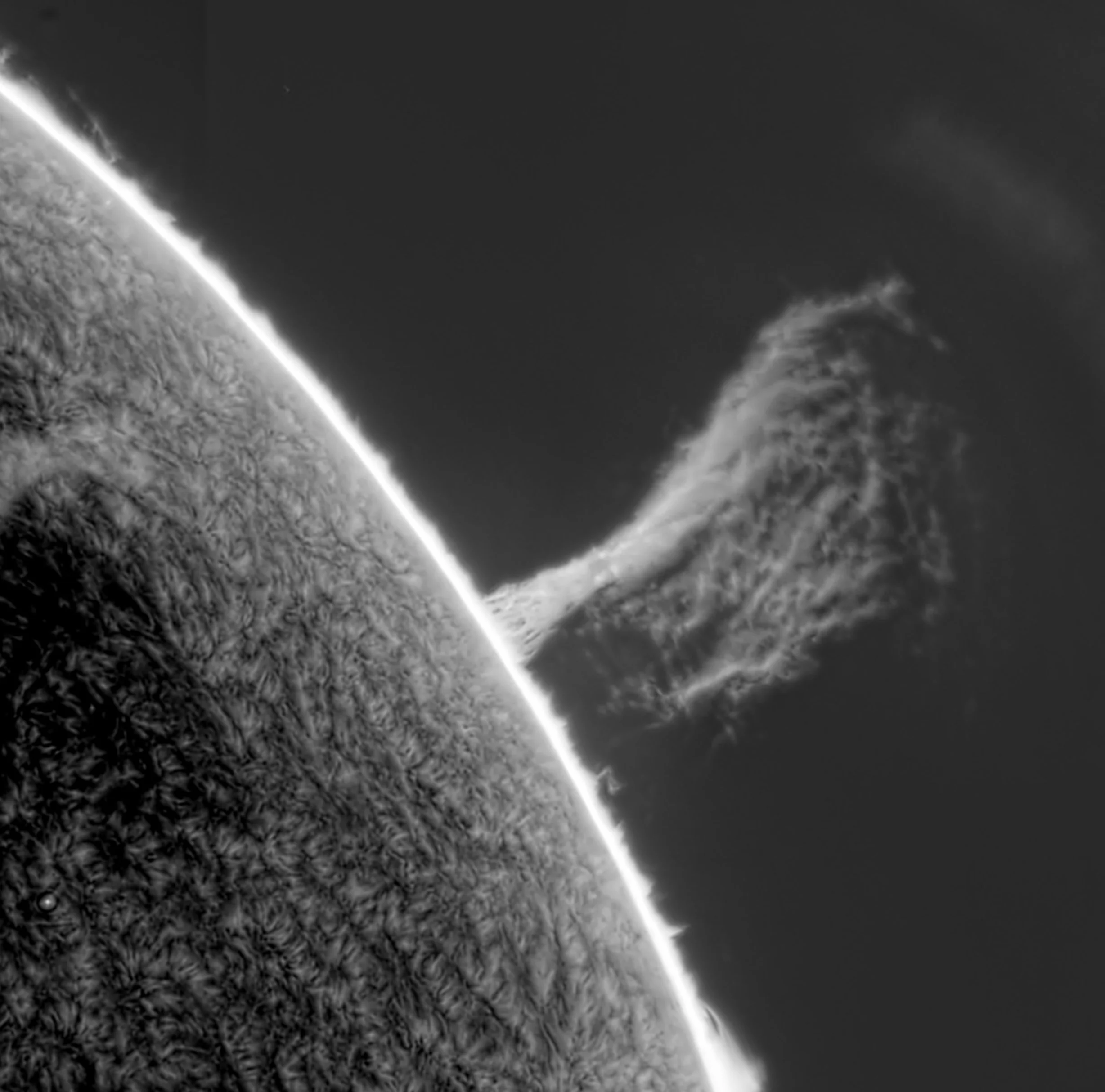
  • H-Alpha filament and prominence documentation

  • Calcium bright-region analysis

  • Carrington rotation analysis

  • Solar Activity Index

  • Annotated image export

  • CSV data export

  • PDF session reports

  • Complete session archive and restore

  • Observer, instrument and camera profiles

Multi-Wavelength Observation

The White Light image is the main analysis image. Additional H-Alpha, Calcium and 540 nm images can be added to the same observing session for comparison and extended analysis.

Analysis and Reporting

SolarStat Pro can generate structured measurement tables, activity analyses, annotated images, CSV files and complete PDF observation reports. Observation sessions can be archived and reopened later for long-term comparison of solar activity.
System Requirements

Operating System: Windows 11, 64-bit
Processor: Intel Core i5/i7, AMD Ryzen 5/7 or better
Memory: 16 GB RAM recommended, 32 GB for large image workflows
Storage: SSD recommended
Display: 1920 × 1080 minimum, 2560 × 1440 recommended

30-Day Trial

A 30-day trial version is available.

The trial starts when SolarStat Pro is launched for the first time. After the trial period, a valid license is required for full functionality.

Permanent License

SolarStat Pro is available as a one-time permanent digital software license with no subscription.

Price: USD 160.00
Delivery: Personal license file by email
Future updates: Included

Payments are processed securely by Fast Spring, acting as Merchant of Record.

Support

For support, licensing questions or trial enquiries:

analog.astronomical.device.ch@gmail.com

Please include your SolarStat Pro version, Windows version and a short description of the issue.

“SSM3” Description

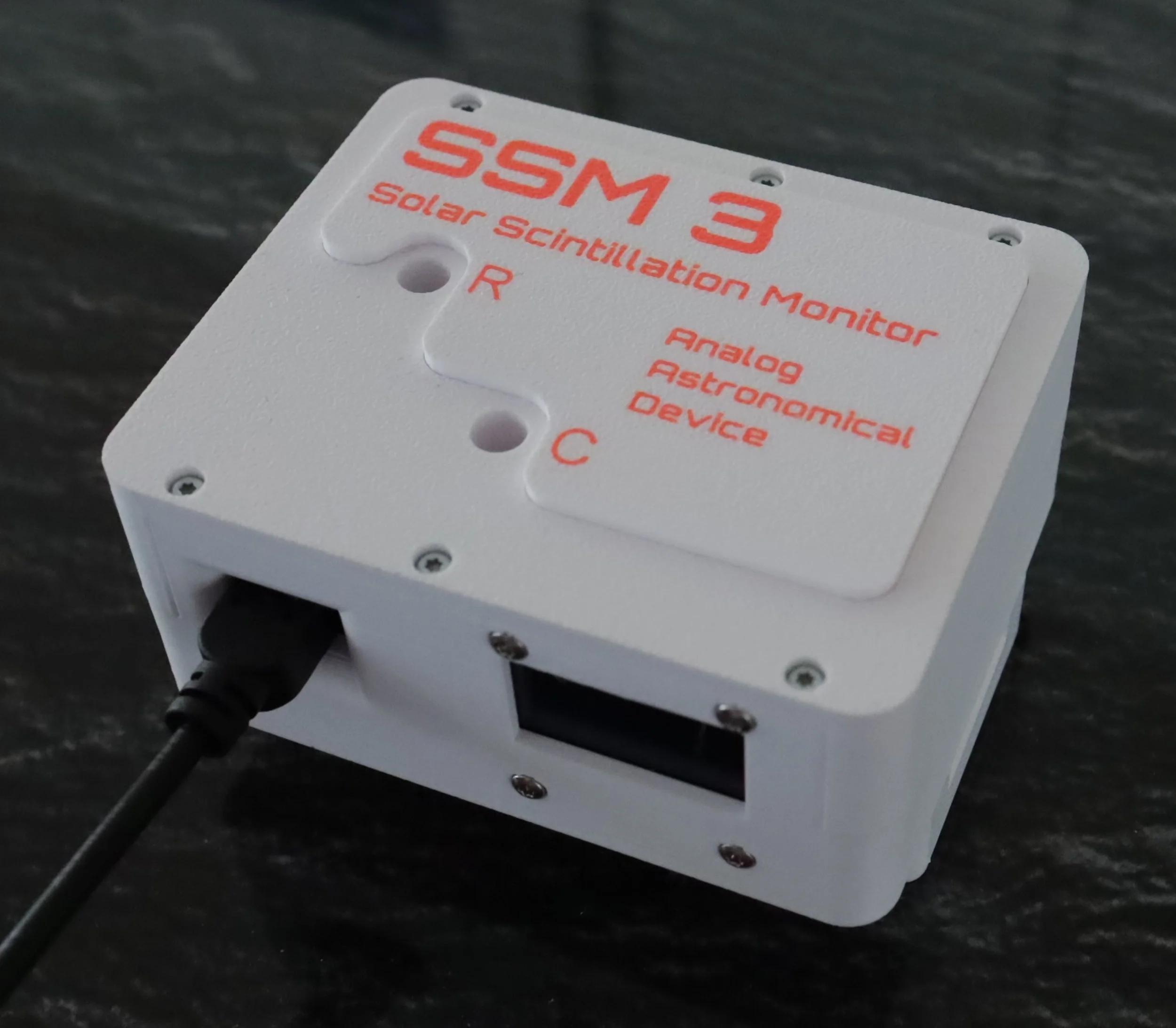
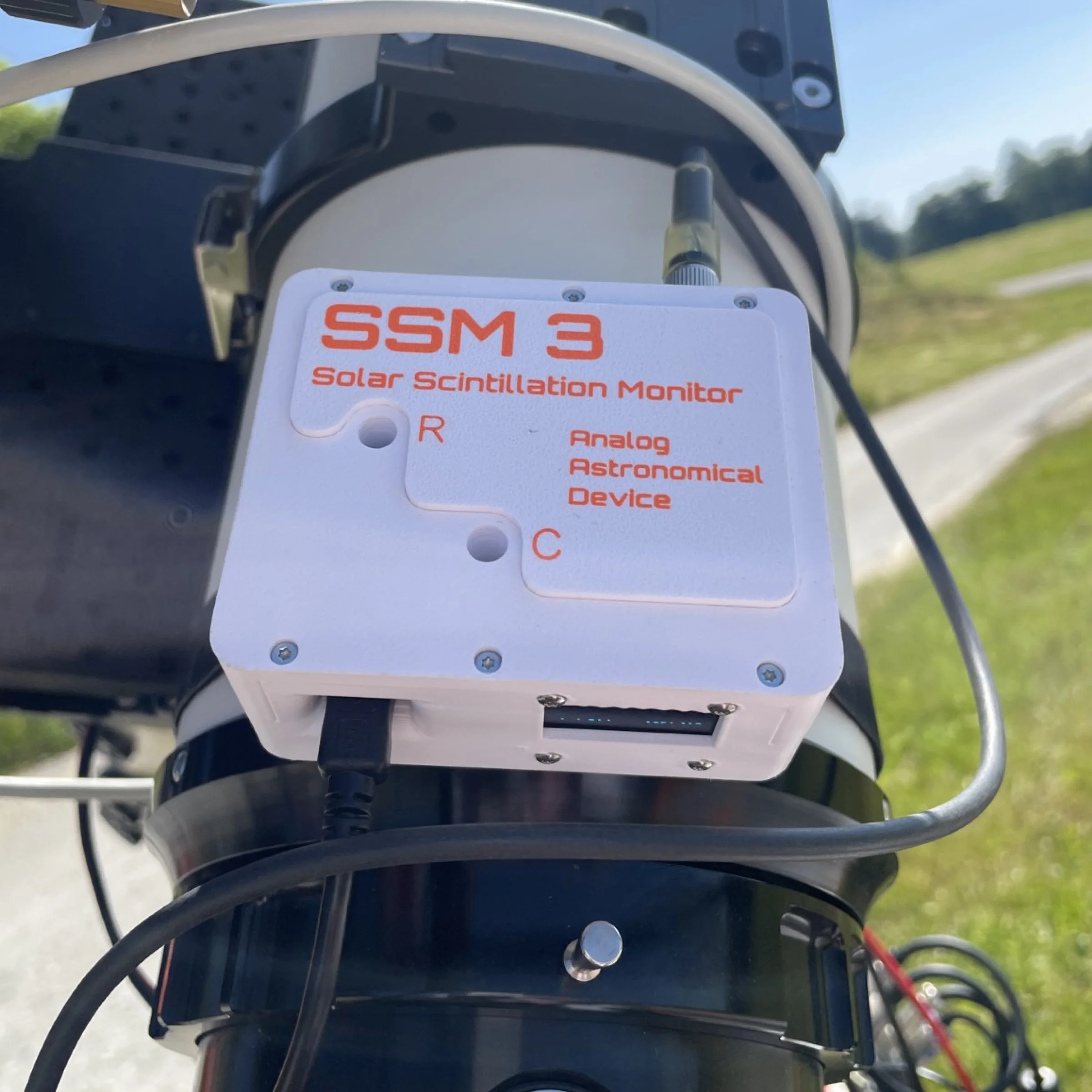
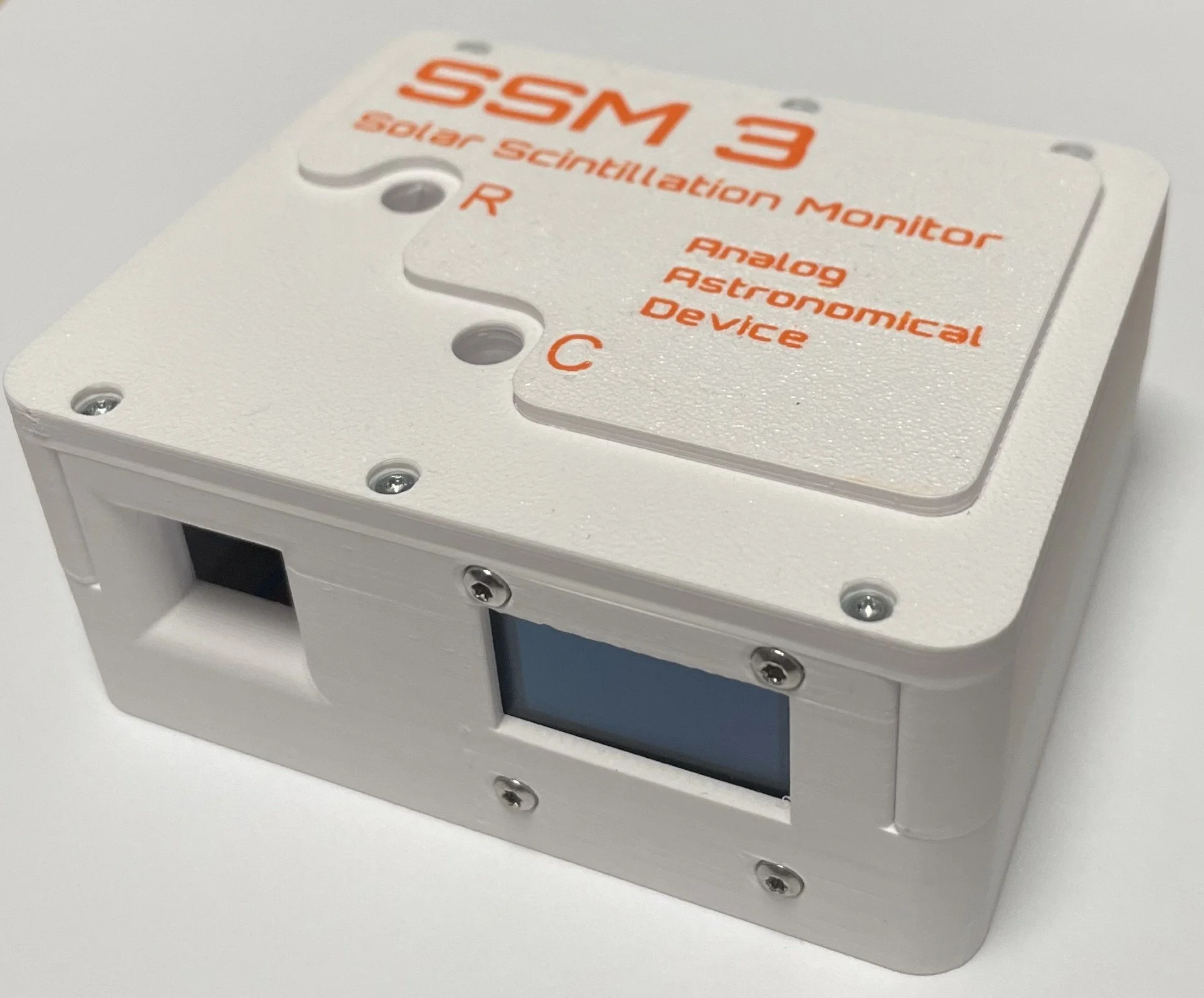
The SSM3 is primarily used for live solar observing. It measures near-ground atmospheric turbulence, known as seeing, which is expressed in arcseconds. This allows the observer to monitor the current seeing at any time and decide when it is best to capture photos or videos.


How it Works …

Technically, the Solar Scintillation Monitor is based on a photodiode that detects rapid intensity fluctuations caused by the atmosphere. The core of the analog signal chain is an LMC6484 CMOS operational amplifier with four rail-to-rail inputs and outputs, which processes and amplifies the photodiode signal. An Arduino Nano then digitizes the conditioned signal, converts it into seeing values using onboard software, and drives an OLED display to present the measurements in real time. This makes the SSM3 a compact, easy-to-read seeing monitor for planning and conducting solar observations.

Whats in the box….

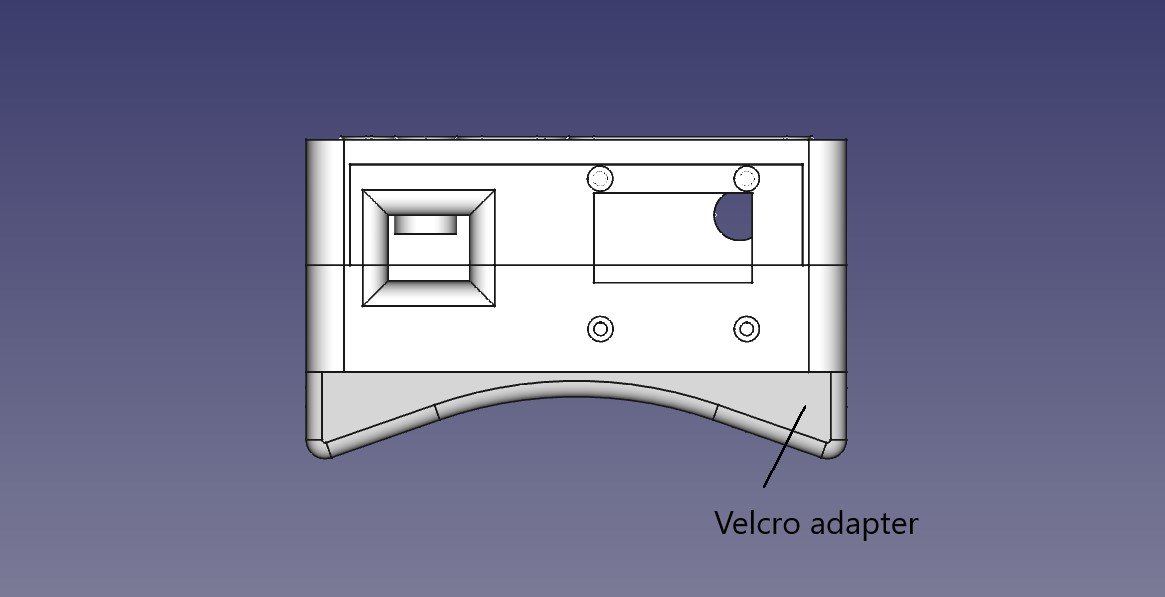
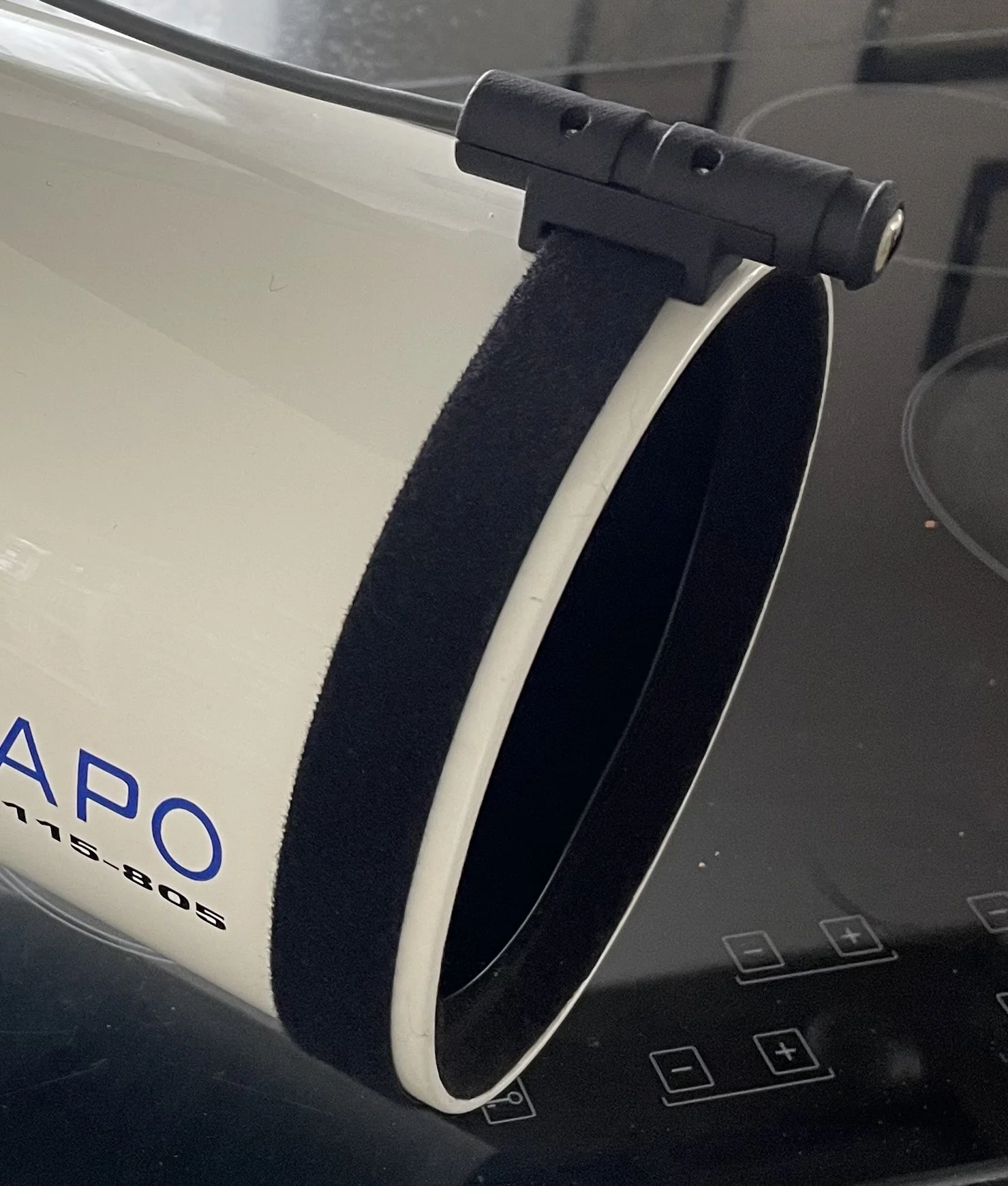
  • Solar Scintillation Monitor SSM3 (including Velcro tape)

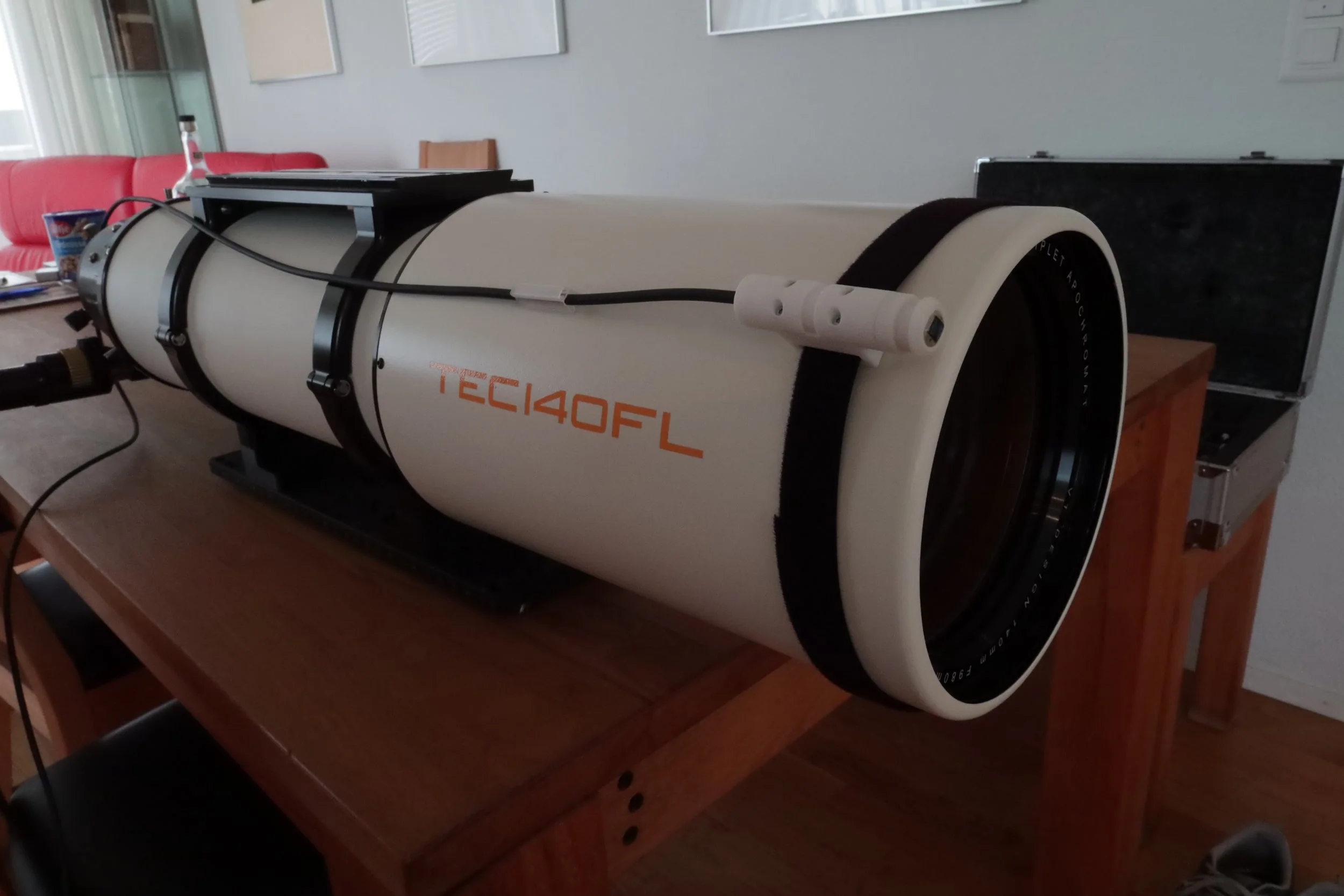
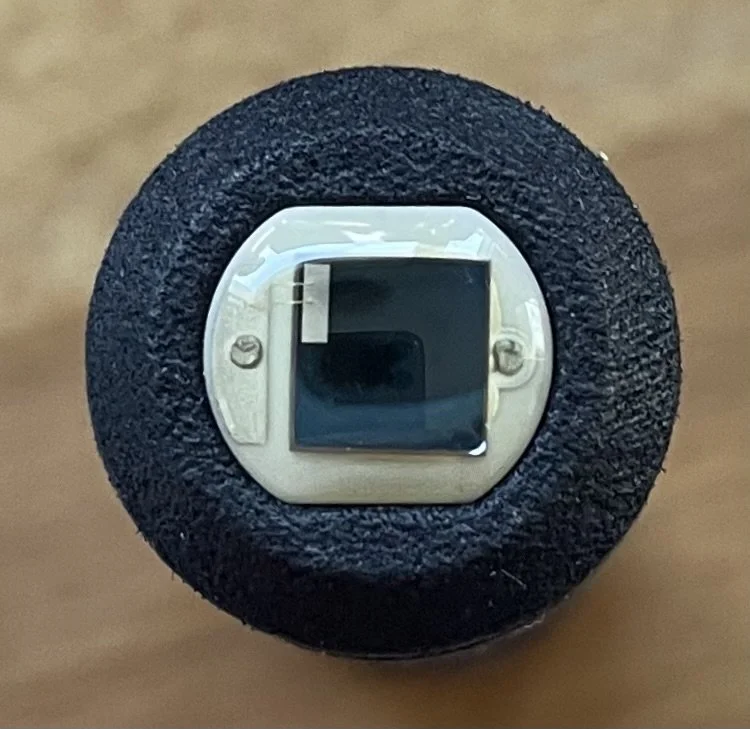
  • Sensor F with cable plug

  • USB cable (1 meter)

  • USB stick (software, manuals)

  • Visualization Software

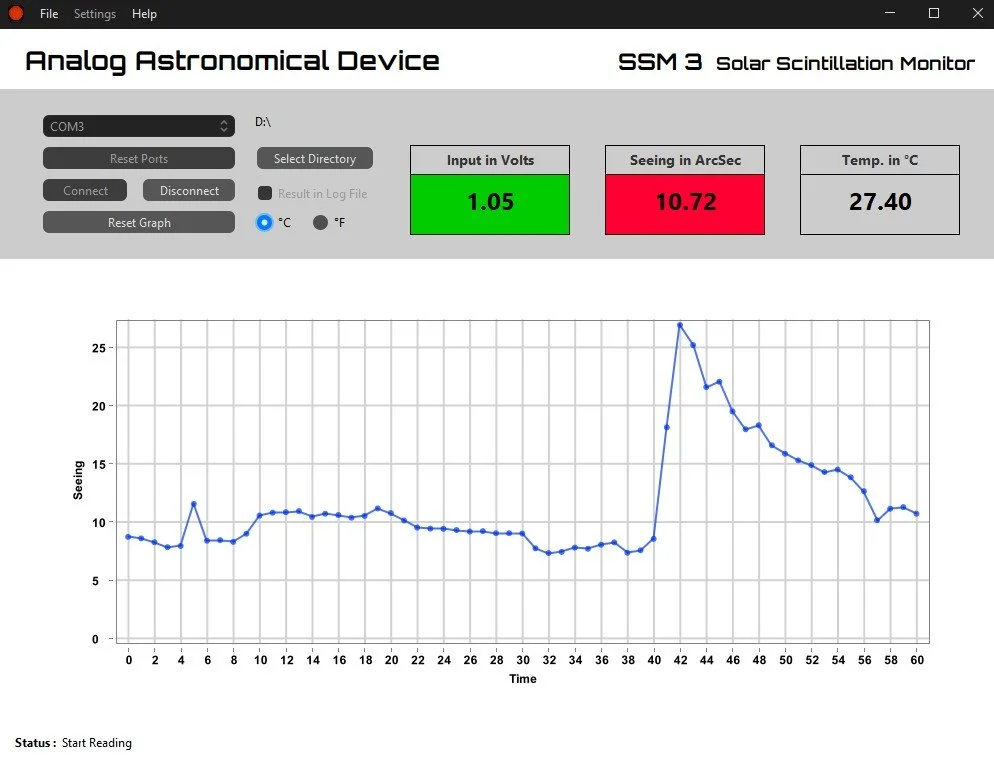
The measurement values can be viewed on the SSM3 OLED or on a laptop using the visualization software. The measurement values can also be recorded and are available for later analysis.

Using SharpCap, the SSM3 Seeing Monitor can be used to create seeing-controlled video sequences. (Only frames are included in the video when the seeing value falls below a defined threshold.)

Orders

The monitor can be ordered exclusively at

www.aokswiss.ch/index_sonne.html


“SSTM3” Description

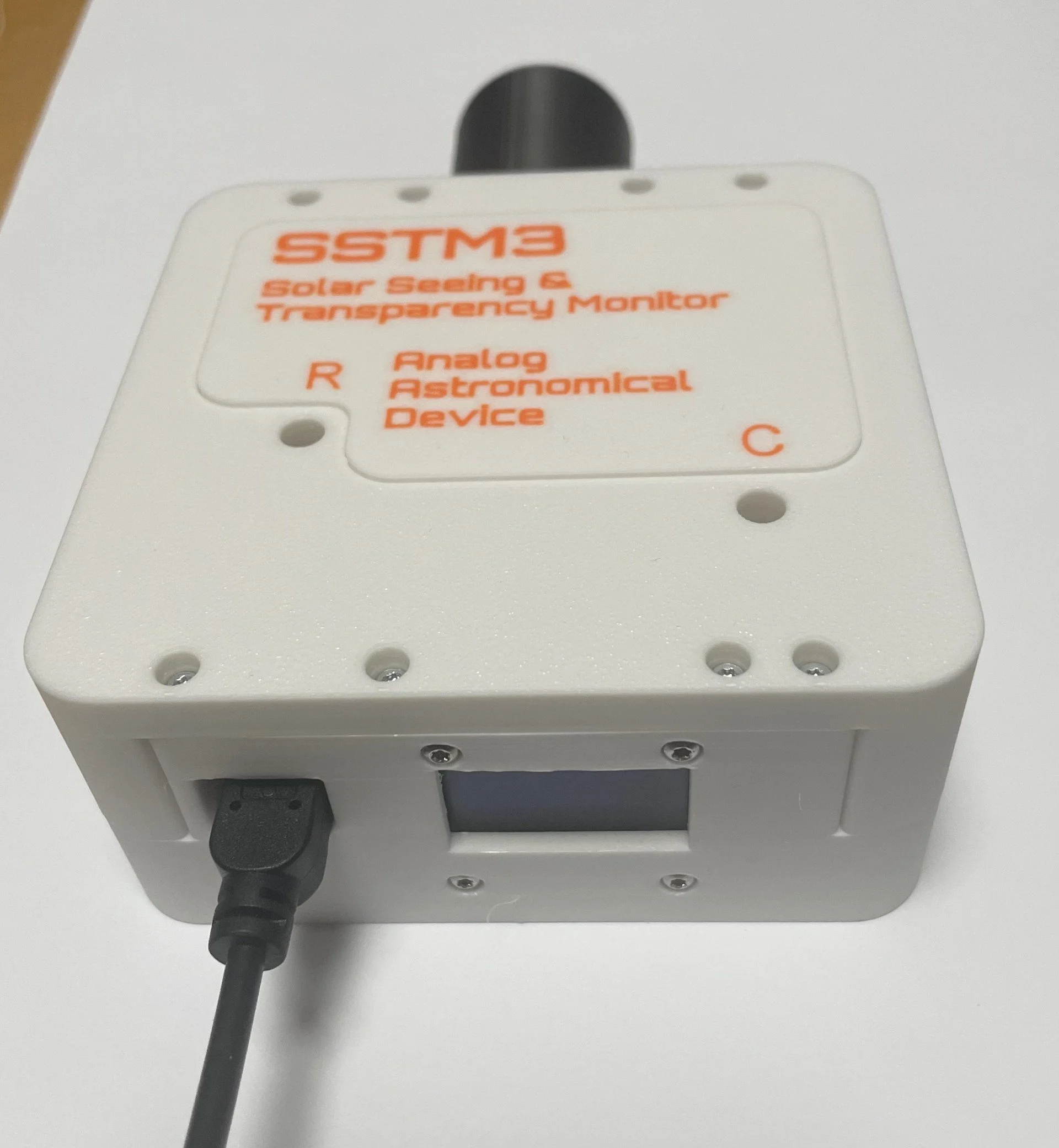
The SSTM3 is a serially connected instrument designed for live solar observing that measures not only seeing but also atmospheric transparency, making observing conditions objectively trackable over an entire session. While seeing describes near-ground turbulence and is reported in arcseconds, the SSTM3 adds additional measurements that reveal changes caused by haze, thin clouds, or varying extinction. This helps the observer decide not only when the image is steady, but also when the atmosphere is truly clear.

How it works…

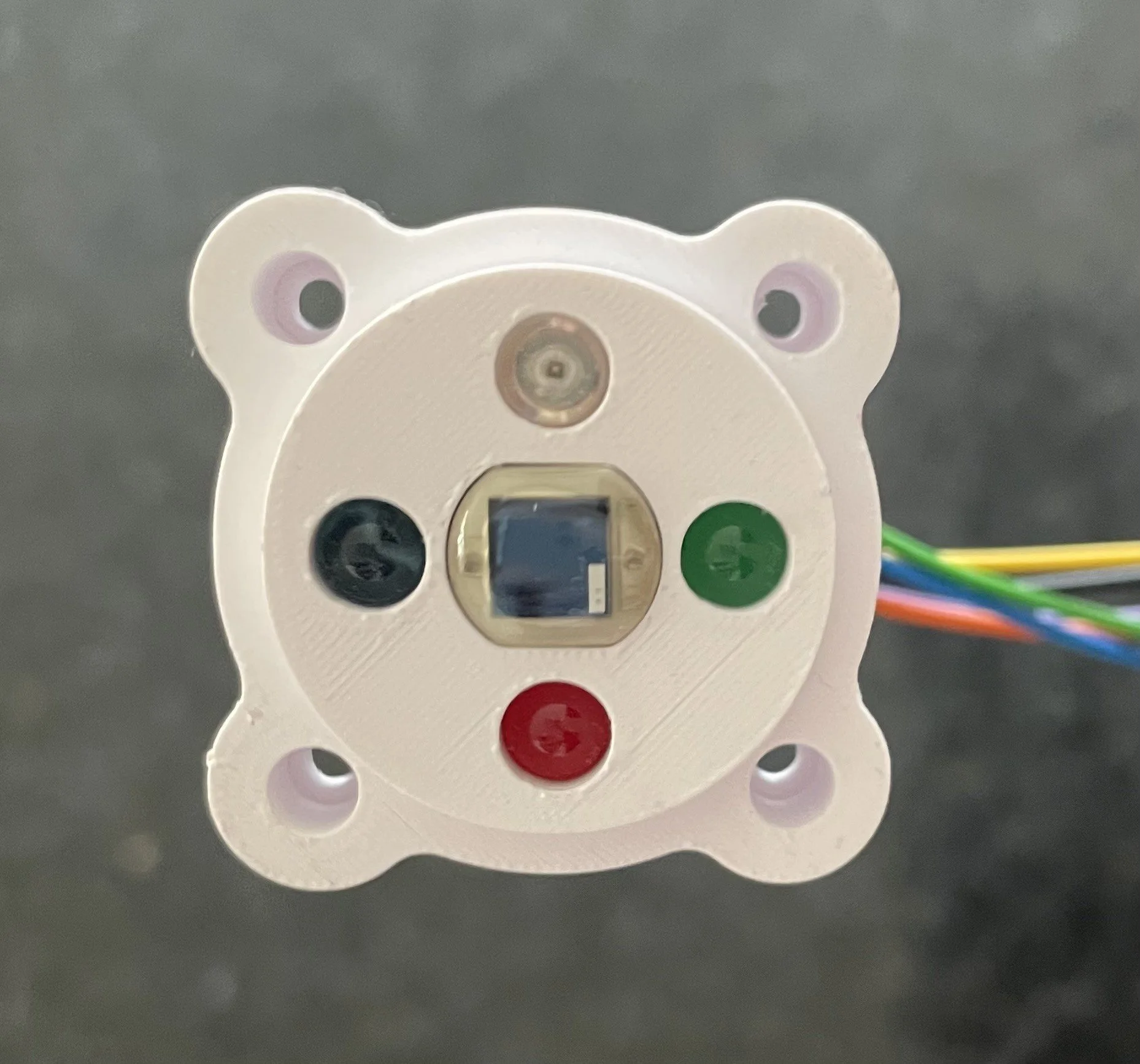
Technically, the SSTM3 uses a multi-channel optical measurement chain and records four spectral channels around 525 nm, 635 nm, 870 nm, and 940 nm, along with a reference voltage (vRef). These voltages make it possible to evaluate transparency in a stable and reproducible way and to observe wavelength-dependent attenuation effects. All measurements are continuously transmitted via a serial interface and can be displayed, plotted, logged, and exported using dedicated Windows software.

In practical use, the SSTM3 complements a pure seeing monitor by adding a second, equally important dimension: How steady is the air? (seeing) and how clear is it? (transparency). With live readouts, rolling plots, 1-Hz logging, and event markers, sessions can be planned and evaluated based on measured data rather than subjective impressions, and results can be compared reliably over time.

Whats in the box….

  • Solar Scintillation & Transparency Monitor SSTM3 (including Velcro tape)

  • USB cable (1 meter)

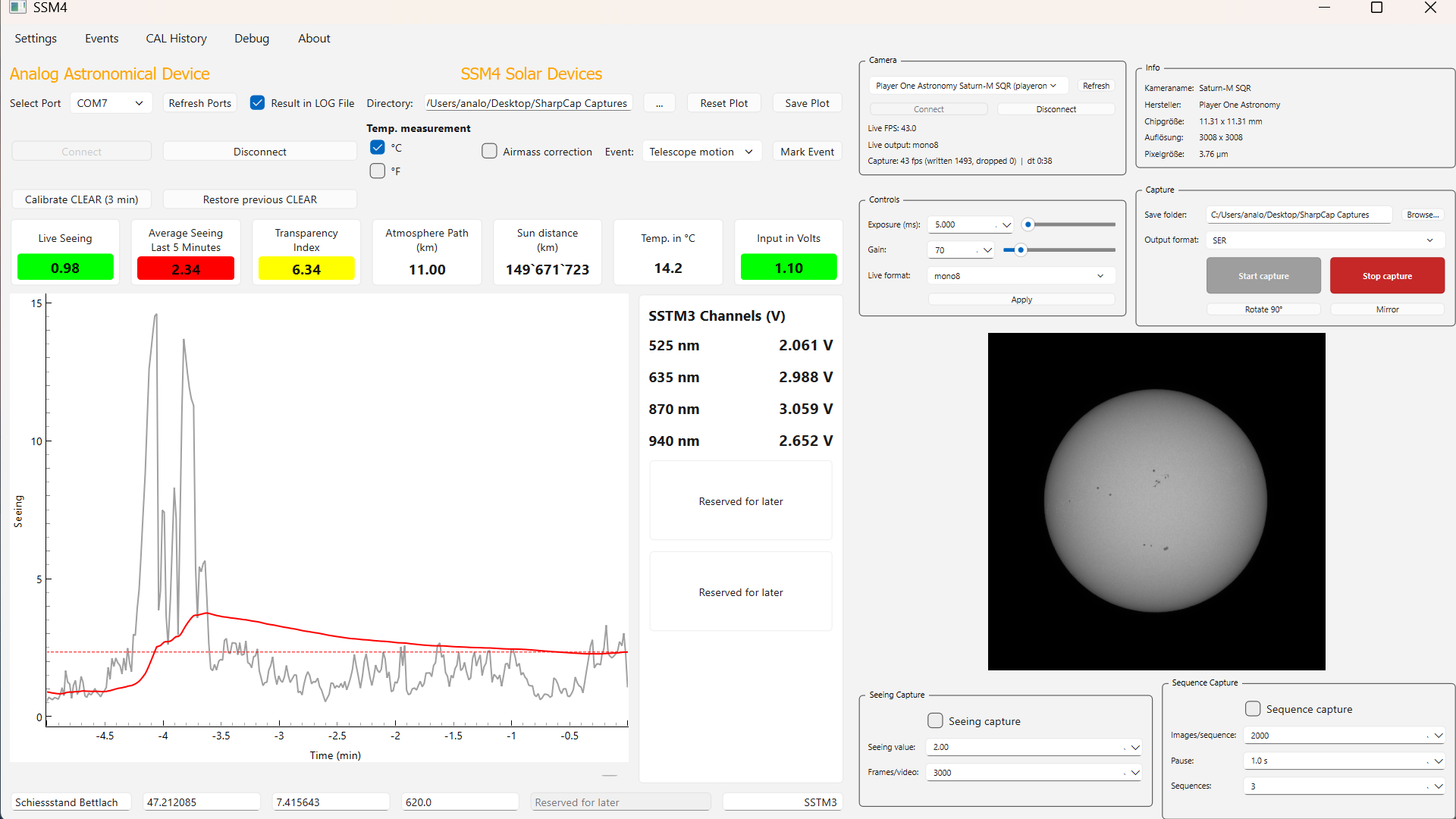
  • Software SSM4 SOLAR DEVICES

Software for SSTM3

To use the SSTM3, you need the SSM4 SOLAR DEVICES Software.

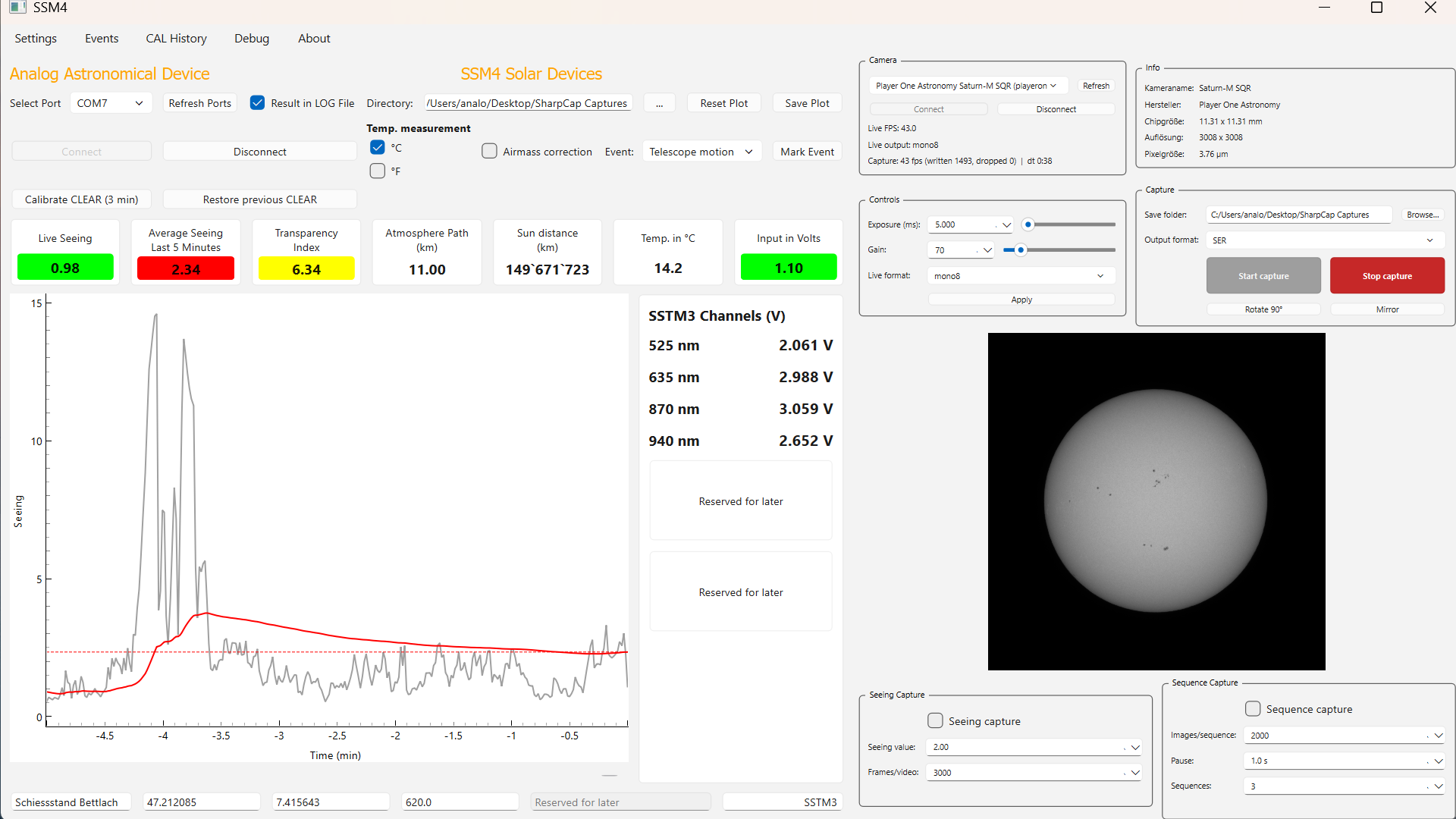
SSM4 SOLAR DEVICES is a stable Windows GUI for measuring seeing and transparency (TKZ) using SSTM3/SSM3 serial data and live camera images. It supports Player One (primary), ASI/ZWO, and a dummy camera mode.

There are three operating modes: Normal Mode (Live View + Single Capture), Seeing Capture, and Sequence Capture. The primary recording format is SER; AVI is an optional secondary format with robust codec fallback logic. When a capture is stopped, the software automatically exports a corresponding package consisting of video (.ser), measurement data block (.csv), and plot (.png) with identical filenames.

A key element of the system is the CLEAR calibration. During calibration, the device collects several minutes of data under clear, stable conditions and stores reference values that define the “clear” baseline. All subsequent measurements are evaluated relative to these CLEAR references. Immediately after calibration, the user can assign a TKZ value (1–9), which serves as an anchor so the transparency index is meaningfully scaled and can move up or down during the session (better transparency → TKZ increases, worse transparency → TKZ decreases). Safety mechanisms ensure that critical calibration and model parameters cannot be accidentally altered during normal operation.

Orders

The monitor can be ordered exclusively at (not available at the moment)

www.aokswiss.ch/index_sonne.html


“SSM4 SOLAR DEVICES” Description

SSM4 SOLAR DEVICES is specialized recording software for solar observation designed to work with the seeing and transparency monitors from “Analog Astronomical Device.” Seeing data and atmospheric transparency measurements are automatically saved along with the video during recording. The software offers three recording modes.

  • Capture Start: Manual start and stop of a video

  • Seeing Capture: Automatic image generation when the seeing value falls below a defined threshold.

  • Sequence Capture: Creation of sequences over a longer period of time for later animations.

The software works with astro-cameras from PlayerOne and ASI.

System Requirements

Built for stable and practical field use, SSM4 runs on Windows 10 and Windows 11 (64-bit). It supports Player One and ASI/ZWO cameras, alongside a dummy camera mode for testing and configuration. When paired with an SSM3 or SSTM3 device via USB/COM, SSM4 delivers a complete solution for live viewing, recording, and measurement data export. For optimal performance, a Full HD display, 8 GB RAM, and adequate free storage are recommended.

Pricing & Shipping

The software costs a one-time fee of $180. Future updates are free. Payments are processed securely by Paddle. After purchase, you will receive your personal SolarStat Pro license file by email. If you are interested, please fill out the contact form at the bottom of the page.

Available at June 2027……